Saturday, August 30, 2025

Hawaii Calls The Wandering Warners*


The travel blogs and the FlyerTalk Alaska Airlines forum are still buzzing days later with discussions of Atmos, Alaska's new rewards program, and the new premium Atmos credit card that Alaska has introduced simultaneously. 

Most of the buzz is positive, some verging toward ecstatic. Others are skeptical. Most frequent flyers are trying to answer the same eternal question: “How will this work for me?”

We're somewhat optimistic so far, as it appears the revised program has room for retired leisure travelers like us to earn points and status.
Kathy just signed up for the new Atmos credit card, despite its hefty fee, because the benefits appear to be very attractive.

Brian will stick for the moment with the regular Alaska Visa he's held for many years, but may cancel it at some point. That card has actually been one of our least rewarding ones for some years, and we'll see if this new one lives up to expectations.

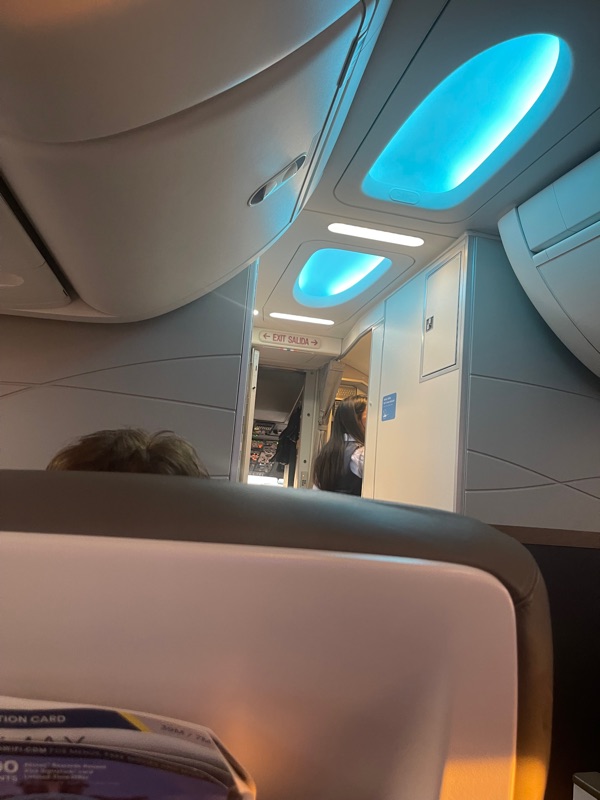
Amidst all of this excitement, we've set off on an Alaska flight from Seattle to Honolulu on the Friday that opens the Labor Day weekend, taking advantage of Alaska's recent two-for-one Hawaii sale.

We found flights that enabled us to apply our upgrade certificates both ways. Five hours in Alaska's First Class is definitely something to look forward to, especially on our first flight since early July.

We drove to SeaTac early Friday afternoon in heavy Labor Day weekend traffic.
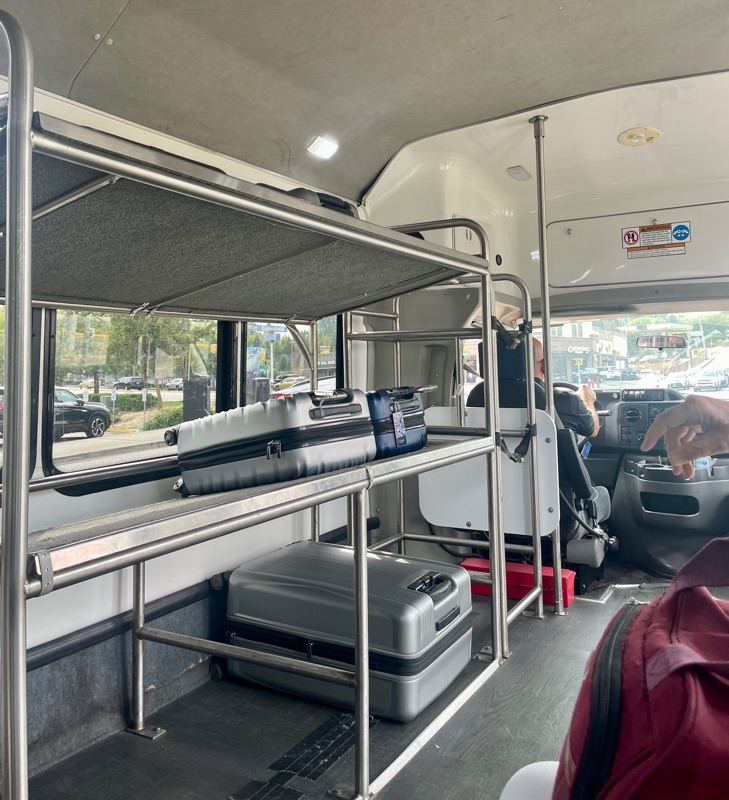
We parked at ShuttlePark 2, the SEA-area parking lot that we generally use. A shuttle bus with only one other customer transferred us promptly to the airport.
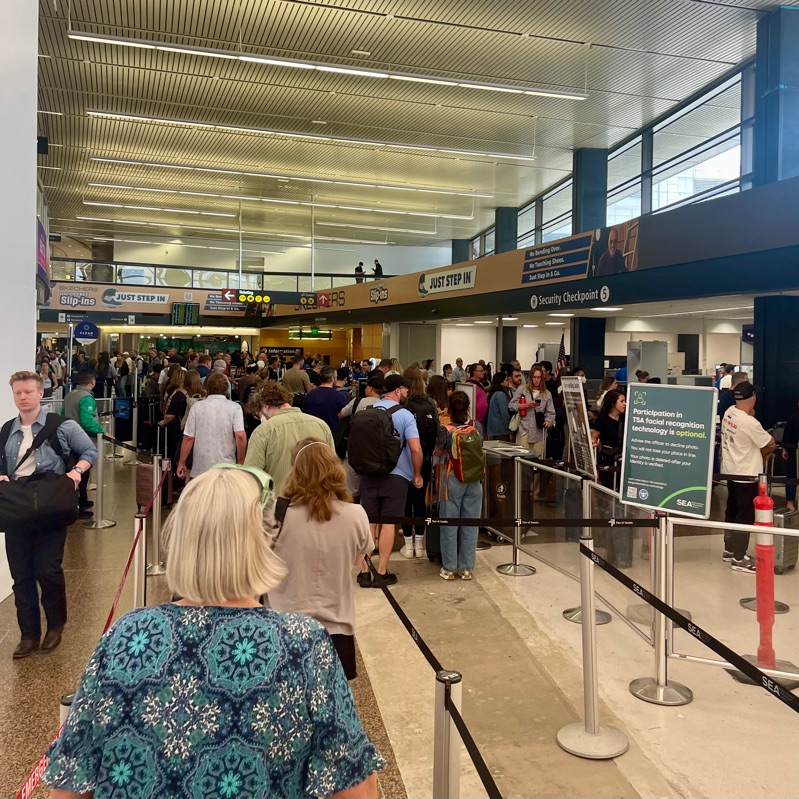
We tend to navigate the Seattle-Tacoma International Airport with trepidation these days, finding it in a seemingly continuous round of renovations, making it a minor nightmare to traverse. 

The TSA PreCheck line appeared long, but we actually made it through without hassles in a very few minutes.
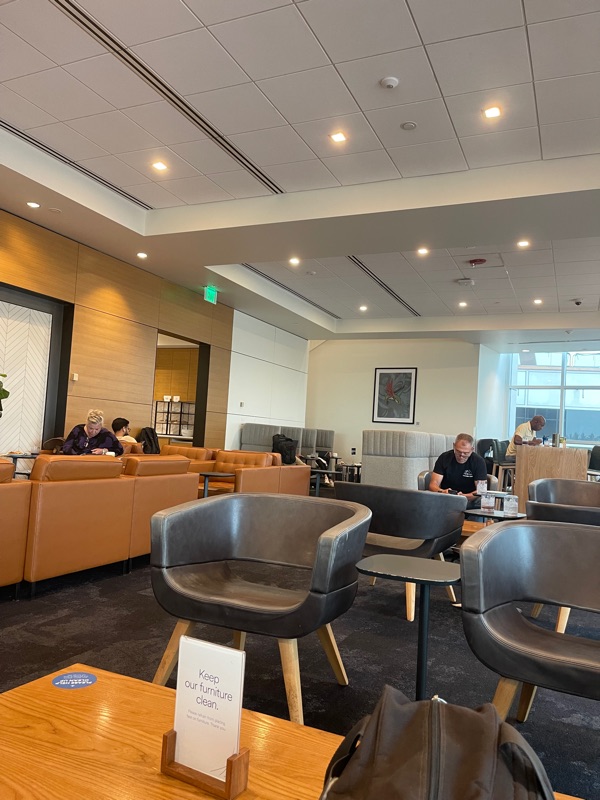
After that, a visit to an Alaska Lounge is a real treat. Alaska maintains three lovely such refuges in various parts of the Seattle airport, and we managed to hit two of them. Most of the business travelers must have reached home already because today both lounges were quiet and not at all crowded.
We arrived at our gate 40 minutes early for boarding as requested. Then we waited with fairly minimal informational updates while a maintenance crew examined something or other.
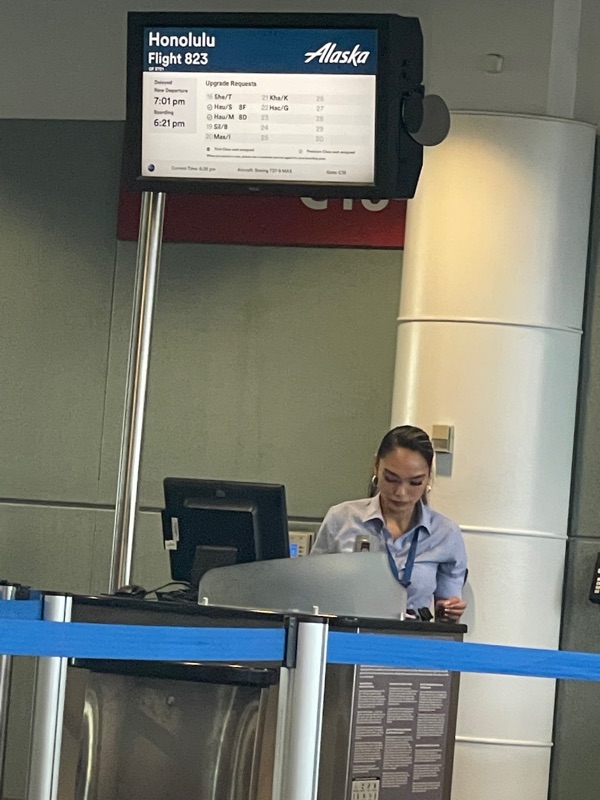
We finally boarded about 40 minutes late, but at least it seems we’re going. Apparently there were cancellations earlier today.
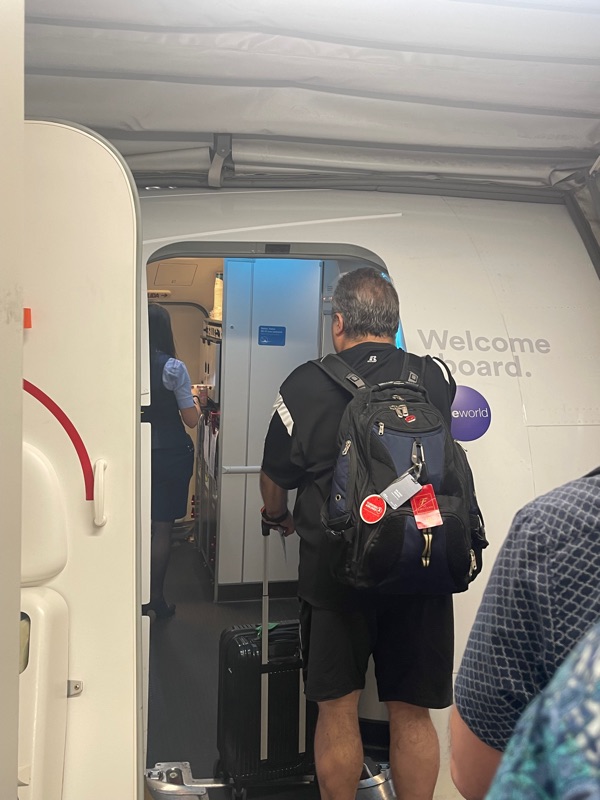
Our plane finally departed the gate over an hour late. It was shaping up to be a long night. So what about the flight itself?

Experienced flyers evaluate an airline's hard product and soft product. As defined by Ben at One Mile at a Time, the hard product is essentially everything attached to the plane, from the seats to the lavatories, while the soft product includes the service, food, and drinks. 

Ben does point out some gray areas. For example, entertainment screens (Alaska hasn't had them for years) and WiFi might be considered a hard product, while the WiFi and entertainment system performance, which can vary from flight to flight, could be considered a soft product.

We consider Alaska's hard product to be good, although not exceptional. It seems roughly comparable to what we've experienced in United and American first class. We've never flown Delta in first class, considered the best by many frequent flyers.

Where Alaska shines for us is in its soft product, particularly the service provided by its overwhelmingly friendly and attentive flight attendants. This includes a good range of drinks, tasty meals, and a snack basket circulated after the meal. Sometimes a gooey chocolate chip cookie is also served, straight from the warming oven. 

The entertainment, accessible through your personal device, makes it easy to pass the time, and we've benefited as T-Mobile subscribers from free WiFi on our flights. Alaska is supposedly converting to free Starlink internet service in 2026.

Our flight attendants tonight are terrific. Despite some bumps, we were served warm snack mix and a very sippable Browne Pinot Grigio to start. A generous pour too!

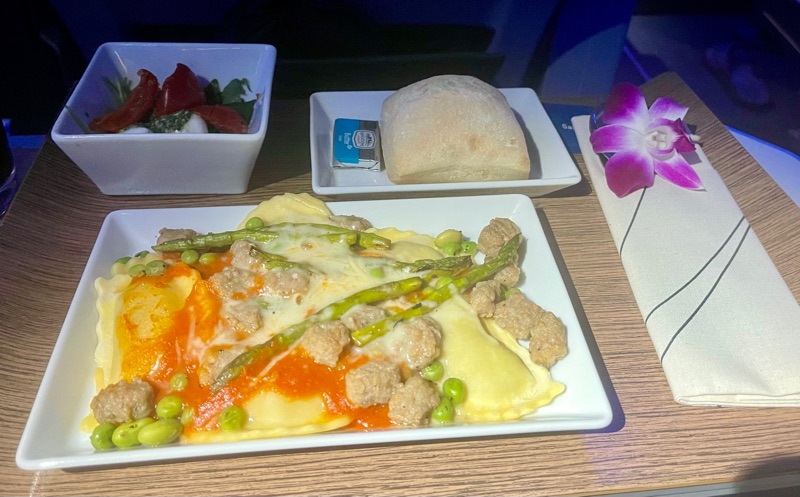
Later came our preselected entrée, a mushroom and sausage ravioli with a Caprese salad on the side and Browne Cabernet Sauvignon. Delicious!
A warm bread pudding was served later, and our flight attendant brought around a snack basket.


We haven't visited Honolulu since 2022. We've previously used Hawaii23 for a private airport shuttle service, and happily booked them again. While the one-way cost is $43 for two, not including tip, the basic cost for a bus transfer for two is over $50, so it's an easy choice. 

Depending on traffic, the driving time between the airport and Honolulu hotels can range from 20 to 40 minutes. With a 10:03 pm HST arrival time (1:00 am our time), our hope was for light traffic. An hour or so later should be even easier, if more tiring.

Our unfortunate driver called us around 10:00 AM Hawaii time to tell us where to meet him. 

We broke the news to him that he’d clearly missed the PM on the email and that we were still on I-5 wending our way toward Seattle. We’ll hope all goes well on our arrival. 

We've stayed in quite a number of Honolulu hotels over the years, mainly Hilton properties, and we're staying for the first time at the Hilton Garden Inn Waikiki Beach. They offered Lifetime Diamond Kathy a complimentary upgrade to a slightly better room, a pleasing start.

Many experienced travelers claim that Honolulu, Waikiki, and Oahu itself are not the "real Hawaii." We've visited most, but not all, of the islands, and we still enjoy the vibe of Honolulu.

We're looking forward to simply wandering around, and visiting at least a couple of favored dining spots from previous trips. What's not to like about that? 

Did our flight land at a decent hour? Was our shuttle driver waiting for us? Did we really get an upgrade at the Hilton Garden Inn Waikiki Beach? We’ll provide an update as circumstances permit. We hope you stay tuned, as the radio announcers used to say back when Hawaii Calls was on the air.

Aloha in the meantime from AS 823.

 *Hawaii Calls was the name of a popular radio program broadcast from Waikiki Beach between 1935 and 1975.

Monday, August 18, 2025

New High-Tech EU Entry/Exit System Starts in October

Somehow this hasn't been on our radar.

The European Union has set October 12, 2025 as the date it starts to implement its new biometric and electronic entry system for visitors. You can read the details on the official EU travel website

Digital photos and fingerprints will replace the stamping of passports by border officials. We read in this article that American and Canadian visitors arriving after October 12 in any of the 29 countries in the Schengen Area can expect delays as they go through a digital registration process where fingerprints will be taken and a digital photo captured.

With exquisite timing, the arrival date of our next trip to Europe is October 14, two days later. We will see what happens then. Of course, as with the US "Real ID" and the EU ETA initiatives, there may be delays in implementing it.

Once everything is in place, supposedly by April 2026, the process of entering and leaving EU countries should be as simple as it ordinarily is for us to enter Canada and the U.S.

The new system will hopefully prevent the type of situation in which we found ourselves when leaving Czechia (Czech Republic) this past March. You can read about it in detail in this post, but essentially the Czech border inspectors couldn't find an exit stamp for our exit from the EU, Portugal, in November. 

We showed them what we had, including our Tripit entry and photos of us aboard the transatlantic cruise that departed from Lisbon. We had ironically entered and exited Italy in January without the inspectors noticing this lapse. Fortunately the Czech inspectors finally realized we were fairly low-risk tourists, got bored with us (what's more boring than senior citizens showing you pictures of their cruise?) and let us proceed.

 Of course, we all know that things can go awry even in a high-tech environment, so we'll reserve judgment until the EU completes this project. 

We'll hope rather than expect our arrival in Frankfurt October 14 will be quick and smooth. 


Monday, August 11, 2025

Atmos-Fear: Program Changes for Alaska Airlines Frequent Flyers?

Please pardon the pun in the title but Atmos, the apparent new name for Alaska's mileage program when it's combined with the Hawaiian Airlines program, has a lot of frequent flyers concerned. Is the Alaska program going to become revenue-based?

In case you didn't know, Alaska is the only remaining legacy airline in North America to award status based on miles flown rather than dollars spent.

This has been a big deal for leisure travelers like us who spend our own money on airfares.

We moved our modest business from United Airlines years ago after United went revenue-based. That, and a couple of other customer-unfriendly decisions sent these two UA "Million Mile Flyers" into the welcoming arms of Alaska.

Since then, we've racked up a couple of hundred thousand flight miles on Alaska metal (i.e. Alaska Airlines planes) and many more on its partners. While we still consider Star Alliance, of which United is a founding member, to be the best airline alliance, we've been pleased with our experiences in the OneWorld alliance, which Alaska joined a few years ago. Alaska has also maintained and expanded an impressive list of partner airlines, on which Alaska Mileage Plan members can earn and redeem miles.

This year Alaska added a new feature that hasn't been common since the earliest days of frequent flyer programs. If you book your award flight with Alaska miles on Alaska or its partner airlines through the Alaska website, you earn EQMs, elite qualifying miles, although not redeemable miles, to attain the various tiers of frequent flyer status for the following year. 

It would be strange if Alaska switches to a revenue-based program immediately after implementing this change, but companies have certainly made contradictory moves before. 

There is rampant speculation that includes an active FlyerTalk thread, and discussion on such travel blogs as View From the Wing and Loyalty Lobby

It seems obvious that establishing a newly combined frequent flyer program with the recently purchased Hawaiian Airlines, expanding Hawaiian flights to Asia, announcing new international Alaska flights to London, Rome, and Iceland, and opening additional airport lounges, would provide an opportunity for Alaska to sneak in a few less favorable changes.

That's the way some other airlines have announced changes, and why "enhanced" has become a dirty word and sarcastic joke among frequent flyers, as in "We're enhancing your travel experience with this new feature."

Like many other Alaska customers, we'll be waiting and wondering to find out what changes it has in store for us, perhaps as early as August 20


Thursday, August 7, 2025

Was Phileas Fogg Right About Travel?

 https://c8.alamy.com/comp/2WB4C87/jules-verne-around-the-world-in-eighty-days-french-le-tour-du-monde-en-quatre-vingts-jours-1873-private-collection-2WB4C87.jpg

 Phileas Fogg Traveling in India by Elephant

 “The unforeseen does not exist.”

Was Phileas Fogg correct about this in regard to travel?

Let’s back up a bit to start. Who was this Phileas Fogg guy anyway?

Well, in case you didn’t already know, Phileas Fogg is the hero of Around the World in Eighty Days, a marvelous novel written around 1870 by the popular French author Jules Verne, translated into English from the French original, Le Tour du monde en quatre-vingt jours.

The plot is ingenious and fascinated Brian’s ten-year-old mind after he received a copy as a gift. Phileas Fogg is a wealthy Englishman, depicted by his French author as possessing the stiffest of British stiff upper lips. In the course of a card game at his exclusive London club, he makes a huge bet against four fellow members.

It happens that three massive projects completed around this time made a tourist-style trip around the world at least a possibility. The first U.S. transcontinental railroad line was completed in 1869, and the Suez Canal was completed in the same year. In 1870 Indian railways were linked across the sub-continent.

After a brief discussion of a newspaper article claiming it was now theoretically possible to circumnavigate the earth in eighty days, Fogg declares it could be done and soon bets half of his fortune against his fellow card players that he can accomplish this feat.

When one of the other club members warns Fogg that he could lose his money “by a single accidental delay,” he quietly retorts “The unforeseen does not exist.”

Young Brian took that statement literally. Old (make that mature) Brian recognizes the irony of the comment, particularly since the balance of the book is devoted to describing the many unexpected obstacles Fogg faces and manages to overcome ingeniously, often by spending down the remaining half of his fortune, on his ultimately successful journey.

It’s still a marvelous read a century and a half after it was written, and a reminder for those of us who value comfort and predictability in our travels that those are never guaranteed. You can prepare down to the smallest detail (and we two tend to do that), but something unforeseen can still disrupt your journey.

The trick, if it’s a trick, lies in how you deal with the unforeseen. We ourselves try to maintain a positive mental attitude, no matter what gets thrown our way. We carry paper documentation of everything connected with our itinerary. When planning our schedule, we try to allow adequate time between, for example, landing at Frankfurt Airport and catching a train in the airport terminal to another destination. If we're relying on a hotel's airport shuttle, we'll call in advance for explicit details if they're not published. Does the shuttle run continuously, hourly, or on call? Along with the instructions, we'll have the hotel's phone number readily available in our TripIt.

Equally important to us as senior travelers is allowing ourselves time to rest along the way. Gone are the days that we would depart early from a European airport, fly to New York or Chicago, transfer to a domestic flight to San Francisco or Los Angeles, transfer to another flight to Seattle, and then pick up our car and drive home two hours up I-5!. Just thinking about that regimen nowadays tires us out.

These days we include in such a flight itinerary at least one night’s stopover along the way, quite happily paying for an extra hotel night in return for a chance at a decent night of rest.

We are much more inclined to hire a taxi or an Uber than to pull our rollaboards long distances.

We share the views of many who consider air travel in particular these days as something to be endured rather than enjoyed. We aim more and more to make the travel part of our trip as pleasant as possible – or at least tolerable, realizing that "getting there" isn't often “half the fun.”

When things go wrong despite our planning, we try to look on it all as part of the adventure of travel. 

We like to think even Phileas Fogg might approve of that.